

Why Most Gaming Communities Fail (Hint: It’s Not the Gameplay)
When gaming communities disappear, the story often sounds the same.
“People stopped showing up.”
“Drama killed the server.”
“The leaders burned out.”
“It just died.”
Rarely does anyone say, “We weren’t good enough at the game.”
That’s because most gaming communities don’t fail in-game. They fail behind the scenes.
Strong gameplay can attract attention. It can bring players into a Discord. It can spark early excitement. But long-term survival has very little to do with kill counts, ranks, or win rates. It has everything to do with operations, structure, and leadership.
Most communities start the same way: a few friends, a Discord server, some channels, a logo, and momentum. At first, that’s enough. People are excited. The founders are active. The vibe is new.
But as the community grows, complexity shows up fast.
New members need onboarding.
Conflicts need moderation.
Events need planning.
Roles need clarity.
Creators need support.
Leaders need help.
What once worked casually now requires systems.
And that’s usually where things break.
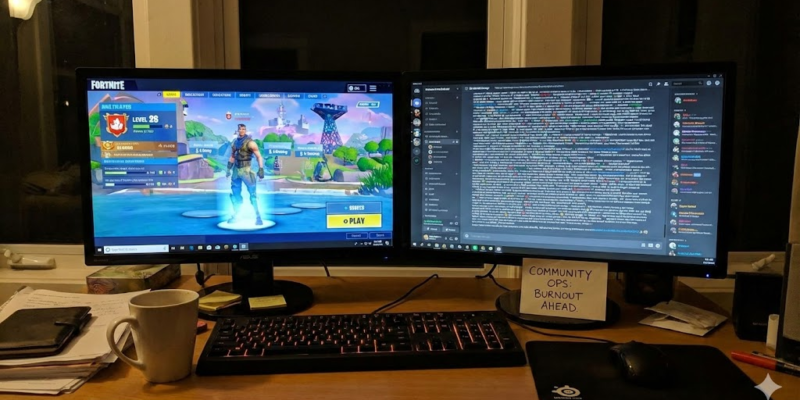
Servers become cluttered. Rules are unclear or inconsistently enforced. Leadership roles blur. The same two people carry everything. Decisions become reactive. Burnout creeps in. Drama fills the vacuum left by structure.
Communities don’t collapse because people stop caring.
They collapse because too much depends on too few.
Without processes, leadership frameworks, and long-term planning, even passionate communities slowly lose energy. People drift. Engagement drops. Founders step back. The server goes quiet.
The hard truth is that successful gaming communities look far less like friend groups and far more like organizations. They require communication rhythms. Defined responsibilities. Scalable systems. Culture stewardship.
When those things aren’t built, the community’s ceiling stays low.
Skill might start a community.
But structure is what keeps it alive.