The Silent Killers of Gaming Communities: Burnout, Drift, and Invisible Labor
Most gaming communities don’t end in explosions.
They fade.
The Discord still exists. The channels are still there. The logo is still the same. But the energy is gone. Messages slow. Events stop. Voice channels empty out.
From the outside, it looks like “people just moved on.”
From the inside, it almost always starts with burnout.
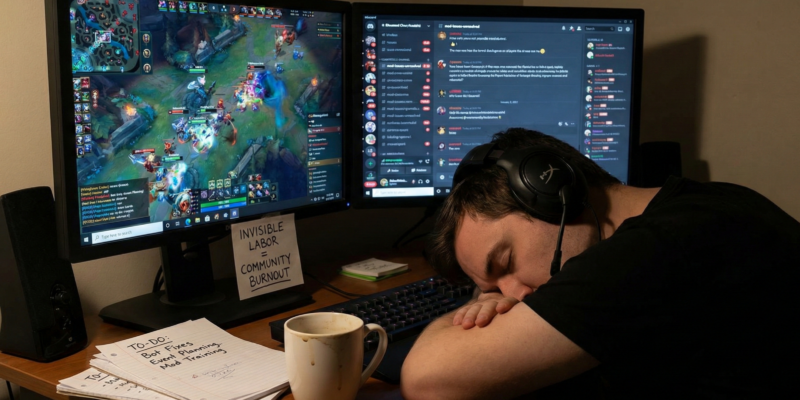
Early communities are powered by invisible labor. The founder setting up bots at 2 a.m. The mod mediating conflicts. The organizer planning events no one thanks them for. The creator making graphics for free. The leader constantly recruiting, welcoming, scheduling, fixing, smoothing.
At first, it feels exciting. Purposeful. Worth it.
Over time, it becomes heavy.
When labor isn’t distributed, documented, or supported, the same people carry everything. They become the tech support, the HR department, the event staff, the marketing team, and the moderation unit all at once.
Eventually, they get tired.
Burnout doesn’t usually announce itself. It shows up as delays. Missed messages. Shorter patience. Less creativity. Fewer events. Quiet resentment.
And then drift sets in.
Without consistent leadership energy, communities lose rhythm. Game nights stop. Recruitment pauses. Conflicts linger. Members feel less connected. New people arrive to empty channels and leave quickly.
The most dangerous phase of a community is not chaos.
It’s quiet.
Because quiet communities still consume emotional energy, but no longer give much back. That’s when founders step away. Mods resign. The few remaining leaders become overwhelmed. The community loses continuity.
None of this happens because people are weak.
It happens because the community was never built to support its own weight.
Sustainable communities don’t rely on heroics. They rely on systems. Shared leadership. Clear roles. Documentation. Onboarding paths. Cultural stewardship.
Burnout isn’t a personal failure.
It’s a structural one.